Atom: A Bold Science Logo for Craft Fair Success
As an embroidery designer preparing for a busy weekend at the local craft fair, my table needs to tell a story instantly. Buyers walk by quickly, scanning for items that catch their eye and solve a gifting problem. This week, I am focusing on the Atom machine embroidery design. Based on the product description, this creative piece is tailored for students, science teams, and educational subjects. My goal is to evaluate whether Atom has the visual punch to convert browsers into buyers when stitched onto real-world handmade product lines.
First Impressions and Visual Mood
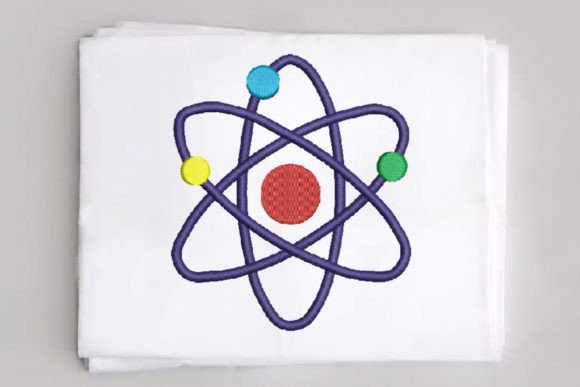
The first thing I notice about Atom is its inherent modernity. Science themes often risk looking too clinical or childish, but a well-executed atomic symbol strikes a balance between intellectual and playful. For a craft fair product, this design feels minimal yet decorative. It does not scream "farmhouse rustic," nor does it try to be overly elegant; instead, it offers a clean, geometric aesthetic that appeals to teachers, parents of STEM students, and science enthusiasts. The potential for brand consistency here is high if I stick to a specific color palette, perhaps using electric blues, silvers, and whites to mimic a laboratory feel, or warm oranges and yellows for a more energetic vibe.
Evaluating Product Placement and Sales Potential
When setting up my booth display, placement is everything. I need to determine where Atom performs best. Here is how I see it working across various items:
- Tote Bags: A canvas tote with Atom centered on the front makes an excellent tote bag design for college students or lab technicians. The large flat surface allows the details of the electron orbits to shine without crowding.
- Aprons: For the apron embroidery market, placing this logo on the chest pocket or slightly off-center on the bib creates a professional look for science teachers or home-brewing chemists. It adds value to a basic garment.
- Tea Towels: Tea towel embroidery can be tricky due to fabric texture. If the stitch density of Atom is moderate, it will hold up well on flour sack towels, making them perfect quirky gifts for science lovers.
- Caps and Patches: An embroidered patch featuring Atom is a high-margin small shop product. Patches are easy to ship and popular with Etsy sellers. On a curved cap surface, the design must be simple enough to avoid distortion.
- Pillow Covers and Pouches: These make great impulse buys. A small pouch with Atom could serve as a pencil case or a storage bag for lab equipment, adding functional context to the design.
Practical Production and Selling Points
From a production standpoint, the viability of Atom depends on clarity. At a craft fair, customers judge quality by touch and sight. If the design is too dense, the fabric may pucker; if it is too sparse, it looks cheap. The description mentions that this digital embroidery file comes with multiple options, which is crucial. I need to verify if these variations include different hoop size compatibilities. A design that scales well from a 4x4 hoop for patches to a 5x7 or larger for tote bags offers the best return on investment.
Photography is another critical factor for online sales. As an Etsy seller or digital vendor, I know that printable mockup images must look crisp. Atom needs to photograph well against contrasting backgrounds. A dark navy tote with bright white stitching of the atomic structure creates a striking image that stops the scroll. The design acts as a focal point, drawing attention to the finished product rather than overwhelming it.
Critical Considerations for Execution
Before committing to batch production for the fair, there are several technical hurdles to clear. The description notes the design is suitable for schools and teams, implying it might include text or intricate orbital lines. I must be cautious about the following:
- Dense Stitch Areas: If the nucleus of the atom is heavily filled, it could cause stiffness on lightweight fabrics like tea towels. Testing on scrap fabric is non-negotiable.
- Tiny Details: Small connecting lines between orbits can break or get lost if the thread tension is off or if the fabric has a loose weave.
- Fabric Texture: Textured towels can swallow small details. I need to ensure the thread colors provide enough contrast against the fabric texture to maintain legibility.
- Curved Surfaces: When applying Atom to caps, the curvature can distort circular elements. A push-pull compensation check in the software is wise before stitching the final run.
- Dark Fabric: If stitching on black aprons, I must ensure the underlay is sufficient to prevent the fabric from showing through the lighter thread colors.
Maximizing Buyer Engagement and Value
The ultimate test of Atom is whether it enhances the perceived value of the item. A plain tote bag sells for $10; a tote bag with a high-quality, relevant science logo can easily command $25 or more. This design taps into a specific niche—education and science—which fosters immediate connection with the right buyer. It signals that the maker understands the customer's identity. For commercial embroidery ventures, this type of targeted design asset is gold. It allows for the creation of cohesive collections, such as a "Science Teacher Survival Kit" featuring the apron, tote, and mug mat all bearing the Atom motif.
Furthermore, the repeatability of the design matters. Can I stitch ten of these in an hour while maintaining quality? If the stitch density is optimized, Atom becomes a reliable workhorse for filling orders. However, if the file is poorly digitized with excessive jumps or trims, it will slow down production and eat into profits. Since the provided description cuts off regarding the specific file formats and exact contents ("comes with multiple embroi"), I strongly advise checking the full product listing for details on included sizes, formats (PES, DST, EXP, etc.), and license terms before purchasing.
Final Designer Notes for Success
To ensure Atom succeeds at the fair and in online listings, I recommend the following workflow:
- Test First: Always stitch out on the actual fabric intended for sale. Scrap cotton behaves differently than canvas or twill.
- Check Contrast: Review thread colors under booth lighting. What looks good in the studio might look dull under fluorescent tent lights.
- Stabilizer Selection: Match the stabilizer to the fabric weight. Heavy cut-away for stretchy knits, light tear-away for stable wovens.
- Mockups: Create at least one physical sample for the booth and high-resolution photos for digital listings. Real samples build trust.
- Licensing: Confirm commercial licensing rights. Ensure the purchase allows for selling finished physical goods, especially if targeting the School market where bulk orders might occur.
In conclusion, Atom holds significant promise as a versatile embroidery asset. Its clean lines and universal recognition make it a strong contender for handmade markets. By paying attention to fabric choices, stitch quality, and presentation, this design can become a staple in a creator's portfolio, driving sales through its appeal to the scientific community and beyond.